One athlete, one unresolved question
Bring Joe into a bounded technical question when ordinary coaching observation has not produced a clear answer.
For coaches and gyms
Joe brings measurement and evidence to one precise technical question in your program, the nuances that decide how much force actually lands, and hands the answer back for you to coach. You stay central.
Every finding feeds your athlete's development, and stays in your hands to coach.
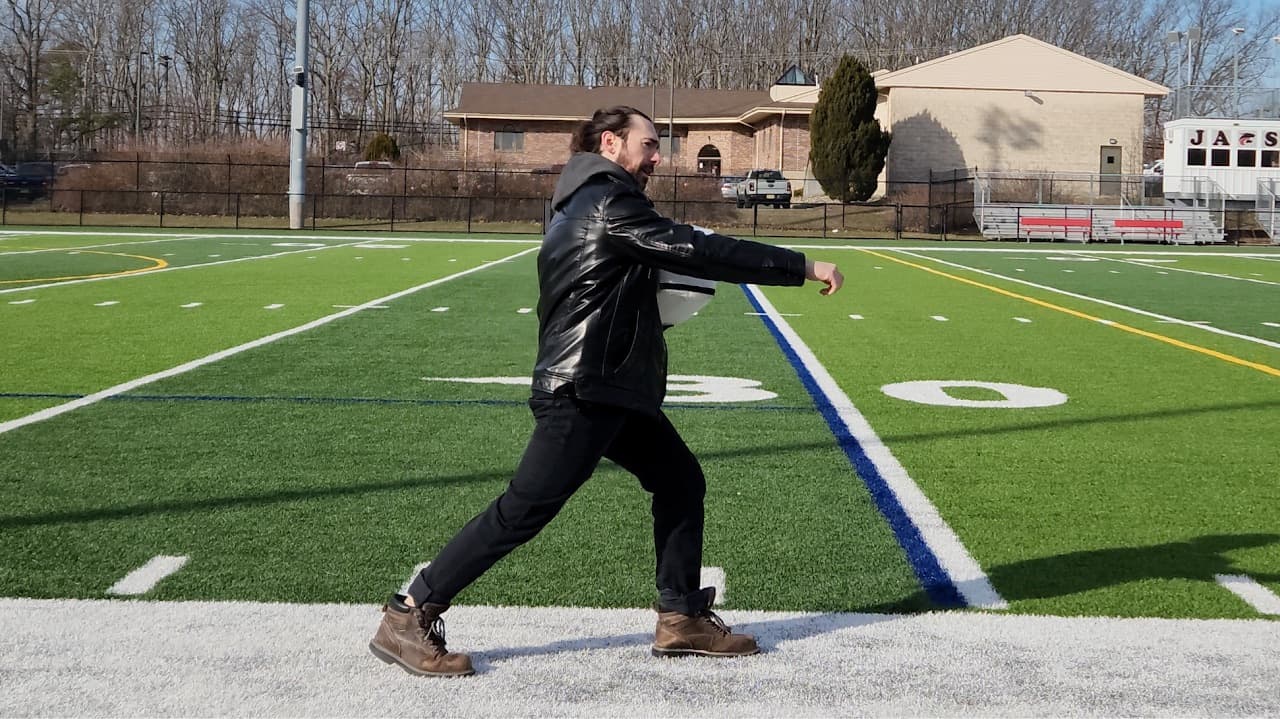
Joe enters as a specialist around one agreed question, not as a competing head coach.
Complementary by design
Coaches already understand the athlete, the sport, and the training environment. Joe adds a measurement-first lens where a specific force-transfer or technique question merits deeper investigation.
Frame the question, observe and measure, test a targeted change, interpret the result, and explain limitations.
Own the wider program, athlete relationship, sport context, implementation choices, and ongoing development.
Agree the scope, communication path, athlete protections, decision criteria, and what a useful outcome would mean.
Why bring in a specialist
A partnership is most useful when the question is important, bounded, and difficult to resolve through ordinary observation alone.
Bring Joe into a bounded technical question when ordinary coaching observation has not produced a clear answer.
Establish individual measurements and a shared reference point before changing cues, drills, or programming.
Use a focused investigation before a competition block, technical reset, or meaningful program change.
Host education, demonstrations, or assessments that give members a disciplined way to think about force transfer.
Partnership models
The right format depends on the number of athletes, the decision being made, the available environment, and whether the purpose is education or individual assessment.
The coach refers one athlete for a defined assessment. Joe returns findings, limits, and options to the athlete-coach relationship.
A selected group is assessed under one agreed question so the coach can compare patterns without turning the exercise into a universal prescription.
Preselected athletes move through scheduled assessment blocks, with private findings and an optional coach or evening briefing.
Joe supports a coach or performance team at agreed intervals for selected cases, roster reviews, or technical questions.
Roster leverage
Assessment days turn a broad roster question into scheduled, individual evidence.
Each athlete can receive a private analysis while the coach sees group-level patterns, ranges, and where follow-up may be worth considering.
Each athlete is treated as an individual case rather than a point on a public leaderboard.
Approved comparisons can show group average, group maximum, and the athlete's position within the session.
Patterns, limitations, and possible next questions are returned to the coaching team.
Only athletes or questions that justify deeper work move into a separate scope.
Individual analysis — sample page
Force at impact, strike by strike
Sample athlete workflow
The process protects the coach's role by making the specialist phase explicit, bounded, and easy to hand back.
Agree on one bounded, competition-relevant question worth investigating.
Use video and measurement to see where usable force may be lost.
Introduce a specific, reversible change and observe its effect.
Compare against the baseline and interpret honestly, including null results.
Hand implementation ownership back to the athlete and coach with clear options.
Athlete protection
The commercial value of a partnership disappears if athletes feel recruited away, coaches feel bypassed, or private findings become marketing material without permission.
Joe does not absorb the athlete, rewrite the entire program, or position himself as a replacement. His remit is the agreed technical question.
The coach, athlete, and Joe agree who receives findings, how recommendations are discussed, and where implementation decisions belong.
Athlete data, footage, and findings remain controlled. Named or anonymized public use requires separate permission and claim review.
Seminars and clinics
Education can stand alone, introduce a partnership, or sit alongside an assessment day. Individual diagnostics remain separately scoped.
A concise introduction to force transfer, timing, effective mass, or where produced force may be lost.
Typical use30–45 minutes · conferences, teams, introductions
A deeper session built around assumptions, public-safe demonstrations, measurable questions, and specialist-coach coordination.
Typical use60–90 minutes · gyms, academies, coach education
Education plus live demonstration and selected athlete observation, with a clear boundary between group learning and individual consulting.
Typical useHalf day · serious gyms and athlete groups
A controlled session for a team, performance department, or institution that needs a more technical discussion under agreed terms.
Typical useCustom · teams, institutions, performance staff
See the working style
Use Joe's own short introduction to assess whether the tone, boundaries, and applied orientation fit your coaching environment.
What we ACTUALLY do at Techanique Consulting
A 60-second look at the work.
Partnership fit
The first conversation is for defining fit and the smallest useful next step, not for forcing a roster-wide agreement.
From the field
Dr. Natale was great at helping me break down how to generate more force on my strikes: how to connect and disconnect my lower and upper body, when to use them together and when to separate.
He gave me many at-home drills to improve. The slow-motion videos and in-person breakdown have truly been a game changer.
Shared with permission. Individual experiences from real assessments; results vary and are not guaranteed.
Partnership inquiry
The form gives Joe enough context to identify whether the right starting point is an athlete referral, roster pilot, assessment day, seminar, or no engagement at all.
Roster size, athlete level, location, timing, and the question determine whether there is a useful fit.
A referral, pilot, seminar, or assessment day is proposed before any recurring relationship.
Communication, athlete consent, data handling, coach involvement, deliverables, scheduling, and fees are confirmed.
Joe completes the agreed work and returns findings and implementation options to the coach and athletes.
Start with a fit conversation. No roster commitment is required to discuss a bounded first step.